
How to Choose Perfect Hardwood Floor Options
This guide breaks the process into practical steps that help you compare options side by side. Read through the species and finishes that stand up to daily activity review installation choices and get clear on cost and care. Along the way you will find examples tips and small tradeoffs to consider so your final selection works for your lifestyle.
Pick a Wood Species That Matches Your Traffic and Style
Wood species determine durability and appearance more than any other single factor. Janka hardness ratings give a standard measure for resistance to dents. Harder species handle heavy traffic and active households better. Popular choices include oak maple hickory walnut and cherry. Oak offers a wide grain that hides wear well. Maple is smoother and shows fewer open grain lines. Hickory is one of the hardest common choices and will resist dents in busy homes. Walnut and cherry are softer than oak and maple but bring rich color that many people prefer for living areas.
- Oak Good for most rooms and easy to find in many finishes
- Maple Low grain contrast and a modern look
- Hickory Very durable and has bold grain patterns
- Walnut Dark tones with a refined appearance
- Cherry Warm red undertones that age beautifully
Hardness and wear considerations
Think about daily activity. If you have pets or teenagers choose a harder wood or a thicker wear layer if you pick engineered boards. For formal rooms or low traffic areas you can choose softer timbers that offer unique color or grain features. Keep in mind that color and finish interact with scratches. Dark glossy surfaces show dust and fine marks more than matte lighter tones.
Appearance and grain
Grain pattern affects the feel of a room. Tight straight grain reads as smooth and modern. Strong cathedral grain provides a classic or rustic look depending on color. If you want consistency ask for quartersawn oak which produces subtle straight grain and greater dimensional stability.
Decide Between Engineered and Solid Hardwood Based on Location
Solid hardwood is a single piece of wood throughout while engineered boards are layers with a hardwood veneer over a plywood or HDF core. Engineered construction makes boards more dimensionally stable in humid or variable climates. That stability allows installation below grade and over radiant heat systems. Solid planks are a good fit for above grade applications and can be sanded more times because they are thicker all the way through.
Where each type works best
Basements and rooms with higher humidity respond better to engineered floors. If you plan to install over concrete or radiant heat choose engineered products with a suitable core. For upstairs living areas and formal rooms solid planks are traditional and provide a sense of authenticity. Review manufacturer guidelines for compatibility with your subfloor and heating system before purchase.
Refinishing expectations
Solid floors can usually be sanded and refinished more times which extends lifespan. Engineered floors are limited by the thickness of their wear layer. A thicker veneer allows at least one or two sanding cycles while thin veneers are effectively one finish choice for the life of the product.
Choose a Finish That Fits Your Lifestyle and Maintenance Habits
Finish protects wood from moisture stains and wear and influences how the floor looks. Factory applied finishes are common and come from the factory in flawless coats that save time during installation. Oil based products deepen color while water based coatings turn clearer and dry faster. Hard wax oils give a natural hand and are touch friendly but they require more regular maintenance. UV cured finishes are durable and hard wearing which suits active households.
- Polyurethane Long lasting and widely available
- Water based Less yellowing over time and faster cure
- Oil finished Natural appearance with periodic maintenance
- Hard wax oil Recoat friendly and localized repairable
Match the finish to your routine. If you prefer occasional deep clean and low touch choose a hard wearing factory finish. If you like to refresh the look frequently and prefer a softer hand choose an oil or wax system that allows spot maintenance.
Board Width and Plank Style Shape the Room Feel
Plank width and style play a major role in the visual scale of a room. Narrow strips create a traditional look and help make small rooms feel orderly. Wide planks provide a modern relaxed aesthetic and highlight the wood grain at a glance. Mixed widths or engineered patterns like herringbone and chevron add architectural interest but increase installation time and cost.
- Strip flooring 1 3 quarter inch or narrower is classic and simple
- Plank flooring 3 to 7 inches is versatile and popular
- Wide planks 8 inches and above show more character and seams
Consider room size and furniture placement. Wide boards can make long uninterrupted runs feel more open. In rooms with many doorways and transitions narrow boards may reduce visible seams and simplify installation.
Color Tone and Grain Influence Mood and Lighting
Color choice changes how large rooms feel and how light is perceived. Lighter tones reflect light and can make small rooms seem bigger and more open. Midrange tones read as warm and flexible with many decor schemes. Dark floors add drama and pair well with light walls but they require more cleaning attention in some cases. Grain contrast affects formality. High contrast grain often reads rustic while subtle grain feels refined.
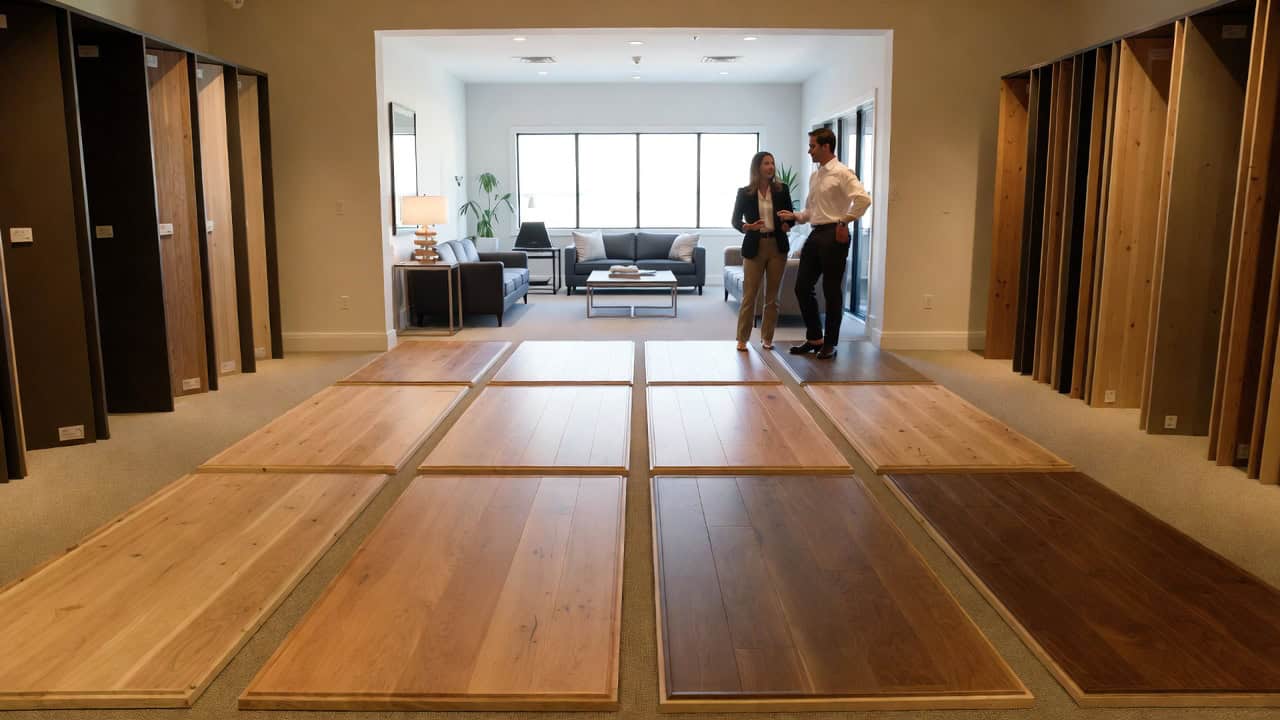
Test samples in multiple areas of the room and observe them at different times of day. Wood looks different under morning light artificial lighting and evening shadows. Place a furniture sample over the boards to confirm how color pairs with existing finishes.
Budget Lifespan and Value Considerations
Hardwood floors represent a long term investment. Prices vary widely by species finish and board type. Solid hardwood typically has higher material cost per square foot although engineered hardwood can reach similar price ranges for premium veneers. Include installation under your budget and ask about underlayment moisture testing and any required subfloor prep. Those steps add to cost but reduce the risk of problems later.
- Calculate total installed cost not just material price
- Ask about expected refinishing cycles and associated cost per cycle
- Factor in warranty coverage for finish and wear layer
Hardwood floors are often a selling point when it is time to move. Choose a style that fits the majority of buyer preferences in your market while matching your own daily needs. Neutral tones and traditional grains usually return value to many buyers.
Practical Tips for Installation and Ongoing Care
Installation quality affects performance more than small differences in product specs. Use a qualified installer who can test for moisture level differences between subfloor and finish flooring. Allow wood to acclimate at the installation site for the time recommended by the manufacturer. Leave recommended expansion gaps and follow manufacturer cleaning advice in the first few weeks after installation.
Regular care keeps floors looking their best. Sweep or dry mop dust and debris to prevent scratches. Use recommended cleaners that will not leave residue or remove finish. Place felt pads under furniture legs and use rugs in high traffic areas. For pet owners trim nails and choose a harder wood or a robust finish to reduce damage.
When you are ready to research choices in detail consult a trusted local expert for samples and in home measurements. For a concise overview of available materials finishing systems and installation methods see this helpful resource on hardwood floor options which covers common questions and decision points.
Common Mistakes to Avoid
Avoid these frequent errors to protect your investment. First do not skip moisture testing for subfloors concrete or crawlspaces. Second do not sacrifice installation quality to save a small percentage of cost. Third do not ignore maintenance instructions for the finish type you choose. Small lapses in care lead to larger repairs down the road.
Choosing floors is both practical and personal. Start by listing nonnegotiables for performance then narrow choices by appearance and price. Bring home samples and live with them for a few days. Ask prospective installers about past work and references and compare multiple quotes. A methodical approach saves time and gives you confidence in the final selection.
Conclusion
Picking the ideal hardwood floor requires balancing species finish plank style and cost with how each room will be used and the conditions in your home. When you select a species consider Janka ratings and grain appearance. Choose engineered boards if you need extra stability or have below grade rooms. Match finish type to cleaning habits and pick plank width to shape the feel of each space. Budget for installation prep and future refinishing so you can plan lifecycle costs rather than only upfront price. Use samples in your actual rooms and ask installers about moisture testing and acclimation to avoid future problems. If you follow these steps you will end up with a floor that looks great performs well and holds value over time. Ready to take the next step? Gather your room measurements and preferred sample boards then talk to a flooring professional to get specific recommendations and a firm estimate for installation.